Blogs

  • Rockstar Triathlete: Christine Coppola

    Age: 47

    Profession: VP, HR

    Why did you choose FCC to help you on your triathlon/health and wellness journey? FCC helped me through a comeback to triathlon, not just physically but mentally and emotionally. Mental strength and resilience is a huge part of marathon/channel swimming, and I feel like I am in good hands with Erinne/FCC to not only train the body, but also train the brain.

    What is your “A” race for this season? Done! Catalina Channel is done, but English Channel will be A race for 2025

    What are your BIG goals?  -Complete English Channel swim Sept 2025 – Completing this will earn me the Triple Crown in open water swimming (20 Bridges, Catalina Channel and English Channel are the 3 swims in the Triple Crown) – I would love to do the Oceans 7 and it would be a very long term goal.

    What were some of your most significant improvements in performance for each of the following? Swim, Bike, Run, and Nutrition/Health. Please include any Personal Records and Goals achieved. I was happy that even though I was training very long, I took the speed weeks seriously and when I did swim tests they always improved. I also got a little better about strength work but improvement area still for sure.

    Name 2 or 3 things that have made the biggest difference in your journey – Taking the time to recover – Allocating time for speed work – Hitting my long swims – Mental/focus

    What would you say to another person who was on the fence about joining our training program? I think Erinne/FCC is flexible when it comes to changing goals. I went from trying to get back in shape and training for a marathon at first, to getting back to long distance tri, then pivoting to ocean swimming.

    Do you want results like these?

    Check out the Beginner Tri Program and make sure to book a call to get $100 off your registration! Click this link: http://www.scheduleyou.in/5ZIsVaU to schedule your FREE Triathlon Transformation Session today!

    Erinne Guthrie has been a USA Triathlon Level II Certified Coach since 1999 and Chief Motivating Officer at Full Circle Coaching, LLC since 2010. She has been training, racing, and coaching triathletes since 1997.  She is also a CHEK Holistic Lifestyle Coach Level 3, USMS Master’s Swim Coach, Motivational Speaker, Metabolic Efficiency Specialist, Mom, and more.

    [/vc_column_text][/vc_column][/vc_row]

  • How Dialing In Your Nutrition Helps Your Performance – Meet Rockstar Richard Gomez

    Rockstar Triathlete Richard Gomez

    Coaches Notes: Richard has made some amazing improvements in just 4 months – it has been wonderful to watch!  Faster times in swim, bike and run and no more meds for reflux. As a CHEK Holistic Lifestyle Coach, this is ultimately the biggest and most improvement I like to see, because without good health you won’t achieve faster times and improved performances.  Way to go Richard, thank you so much for trusting the process and following the plan to the “T.”  When you do that, these are the results that are possible being part of the Gold Group!  Can’t wait to see what happens when we go VIP soon for your Ironman Journey!

    Age: 43

    Profession: Construction Manager

    Why you chose FCC to help you on your triathlon/health and wellness journey? 
    I had been doing triathlon’s and training on my own for a year and a half. After completing my first Half Ironman (Augusta) in 2018 I realized that if I really wanted to complete a Full Ironman I needed some help; specifically on the nutrition side. I did not feel well after my race; I was eating whatever I wanted and I really was just plateauing on my training. I had met Erinne through my sister in law a year ago during a Mack Cycle race. After my Half Ironman, and deciding I was going to try for the Full, I decided to give her a call and see what her group was all about. After a couple of meetings and attending a few of her classes I was sold.

    What is your “A” race for this season? 
    Lake Placid Ironman 2020

    Please share your BIG goals: 
    Getting my nutrition and reflux to a point that it does not affect my racing. Get my weight down to 150 lbs. and maintaining. 6 Hour Half Iron; Full Iron under 14 Hours.

    Tell me about your successes so far: 
    Before starting Erinne’s gut healing Nutrition I was taking prescription Omeprazole daily for my reflux and could not take any nutrition while running as it would cause my reflux to flare up. Since starting her program the end of January I have not taken one pill for my heartburn and am able to finally take in nutrition while I run. Plus I am weighing 151 lbs. and have been maintaining. (lost 25 lbs)

    What were some of your biggest Improvements in performance for the each of the following? Swim: Bike: Run: Nutrition/Health: Please include any Personal Records and Goals achieved: 
    My swim pace and form has been drastically improved. I have PR’d every swim since I started training with Erinne. Biking was my strong suit before training with Erinne; however she did point out my bike fitting was not ideal. After getting this adjusted, my comfort level on the bike has been drastically improved, making my run transitions seamless. Aside from my nutrition, running has been my biggest improvement since joining Full Circle. When I started with Erinne my goal was to be at a sub 10 minute mile in a sprint triathlon. My last race I averaged 8:49 per mile. Almost two minutes better than my goal only after four months of training; and that is even with the fact that I had tendonitis that kept me from running for three weeks. Nutrition, I can’t say enough. Not more reflux or heartburn; I have lost 25 pounds; my diet is better than it has ever been, yet I am never hungry or craving junk food; I have cut back on my booze intake; and most importantly I am able to eat while training.

    Name 2 or 3 things that have made the biggest difference in your journey:

    1. Nutrition and understanding how what I eat affects my training.

    2. The tribe/group structure really does help push and motivate me on the days I don’t want to get up

    3. Having someone to critique/observe your form really helps identify little form issues that you will never catch when training on your own.

    What excites you the most about being involved in triathlon? 
    The sense of personal accomplishment and enduring the mental strain associated with endurance racing

    What would you say to another person who was on the fence about joining our training program? 
    First, getting with Erinne to understand your nutrition is life changing. Never really understood how important this was not only for the physical, but for my overall balance of Mind, Body and Soul. Second, as I stated above, the importance of having someone with Erinne and her teams expertise and knowledge to observe you and make subtle adjustments to your form, technique and training is immeasurable.

    If you’re ready to take your nutrition to the next level, join us for Nutrition Essentials. We are getting ready to start the next cohort so book a FREE, no obligation call to see if Nutrition Essentials is the next right step for you! This could be you!

    Erinne Guthrie is a USA Triathlon Level II Certified Coach since 1999 and Chief Motivating Officer at Full Circle Coaching, LLC since 2010. She has been training, racing and coaching triathletes since 1997, Member of Team USA and Competed in over 150 races. She is also a CHEK Holistic Lifestyle Coach Level 3, USMS Level 2 Master’s Swim Coach, Metabolic Efficiency Expert and Motivational Speaker, Mom, and much much more.

  • How was your Race? Discover the importance of Post-Race Reports

    An important aspect of racing triathlons is evaluating what happened after the fact.

    I wanted to share an example of a post-race report, which I ask all my athletes to give me after each race.

    It is an excellent way to celebrate the wins because there are always some, even when the race does not go as planned.

    And it’s a great way to set the next training block goals with specific things to focus on.

    Mark Testoni came to me last year ready to start training for his 1st triathlon.

    The day before our first session, I got a call from his wife because he was in the hospital after being hit by a car on his bike!

    He had some pretty serious shoulder and Achilles injuries and starting training would have to wait.

    We worked on getting him healthy enough to attend the February 2024 Ultimate Tri Camp, where he leaned into learning about all the technique work with the video analysis and testing.

    Over the past four months, he has worked very smart and hard to make it to the start and finish line of his 1st Triathlon.

    Even though it did not go perfectly – he got a cramp in his hamstring on the run, which is his strength, and had to walk most of it – he still achieved the goal: feeling confident at the start, crossing the finish line, and feeling hungry for redemption at the next triathlon.

    Congratulations, Mark! It’s official- you are a triathlete!

    In true triathlete style, the road to success, just like life, is not linear.

    Thanks so much for allowing me to share your report and trusting the process of my Triathlon Transformation training program

    You did it!!!!

    Here is his post-race report:

    Pre-race/prep.  Very positive.  Build previous cycles felt good.  Open water practice with Coach E and my own couple of sessions helped build a measure of confidence. Felt strong. Taper provided refreshed body. Ate clean days approaching race.  Solid sleep Friday night b4.  Saturday in bad at 8:30p rose at 3a.  Solid 5+ hours of sleep according to whoop which is great for me when I heave early wake ups.  Breakfast of 2 eggs and a small portion of oatmeal and blueberries.  And a banana on the ride to KB. Consumed about 24oz of fluids event morning. 

    Arrived at venue early, followed warm up recommendations for run. Glute/hamstring was tight but no worse than previous few days. Set up was good. Didn’t forget anything. (Your checklist is great!).  200 yard warm up swim.

     Swim.  Confidence building to just do it.  Conditions were perfect for a first time person.  Calm.

    Positives—completed it.  Experience. Body contact with others. Never felt panicked. Stayed relaxed. Increased my freestyle time vs back swim over previous workouts in open water. Decent transit from ocean to transition area.  Also feel like I’m doing better getting on my sides and driving some torque. Hard to imagine me doing this 4 months or so ago at camp—so thanks for bringing me this far.

    Where I need to work.  Just about everything related to form—catch.  Kick consistency, core strength and maintaining body position. Need to keep building endurance. Among the slowest swimmers in the field.  217th out for 237.  (At one point, I thought I saw a rock on the ocean floor pass me 😂). 

    Transition #1.  Slow—bottom half of the field.  Gear/nutrition sets up worked.  Socks took time. Need more practice and work towards barefoot, at least for short events. Jogged out and got on bike fine.

    Bike.  Very solid.  

    Positives.  Body felt good and strong.  No issues coming off of swim.  Good position. Ramped the speed up.  Average 181 power, nominal power 200 and 21.6 mph.  Cadence average 89. HR average 141.  42 seconds faster than May duathlon on same course.  29th out of 237 in field biking.  Consumed a caffeine gel pack after the bridge turn.  Consumed about 15 oz of fluids on the ride.  Set up for the run well

    Where I need to work.  Looking forward to your cycling assessment.  Body position, improve cadence.  I can go faster given the engine.

    Transition #2.    Better, middle of field.  Sat on ground. Nutrition and gear set up good. Jogged out of transition area. 

    Run. A tale of 2 cities … eased into the pace and the glute/hamstring and Achilles felt pretty good.  Built to about an 8:45 or so pace. At .8 mile water station with a turn,I made a bit of an awkward moves reaching for a cup of water and felt the hamstring pull/strain. Could not continue the pace.  Slowed to a walk for a bit. Worked to stretch it a bit as I walked.  Intermittent jog/ walk for the next mile.  Was able to build to a slow jog the last mile brought the pace up to between 10-11 minute mile. Labored across the finish.  10+ minutes slower than May duathlon on same course.

    Positives.  We did everything we could to get the injured glute/hamstring ready.  Took the chance — Wasn’t meant to be.  Good cadence out the gate.  Very pleased with how I eased into it. After the injury, battled it to finish without causing further damage.

    Where I need to work.  Need to get the leg past these minor injuries and look forward to your assessment of my form etc.  I can run well—at least historically—just need to get a good healthy baseline and build. 

    Overall.  Conquered the swim and battled through an injury.  Learned a lot. So great to interact with other FCC athletes and see them podium and do so well yesterday. At 

    The beginning of the journey and ever confident to get better.

    Post race day—getting the hamstring massaged today.  Full massage later in the week.  Compression pants

    Thanks for your coaching to get me through this first event!
  • Eat This, Not That

    It can be so confusing when you want to start to eat healthy but you see and hear so many conflicting things on the news, in magazines and from your friends.

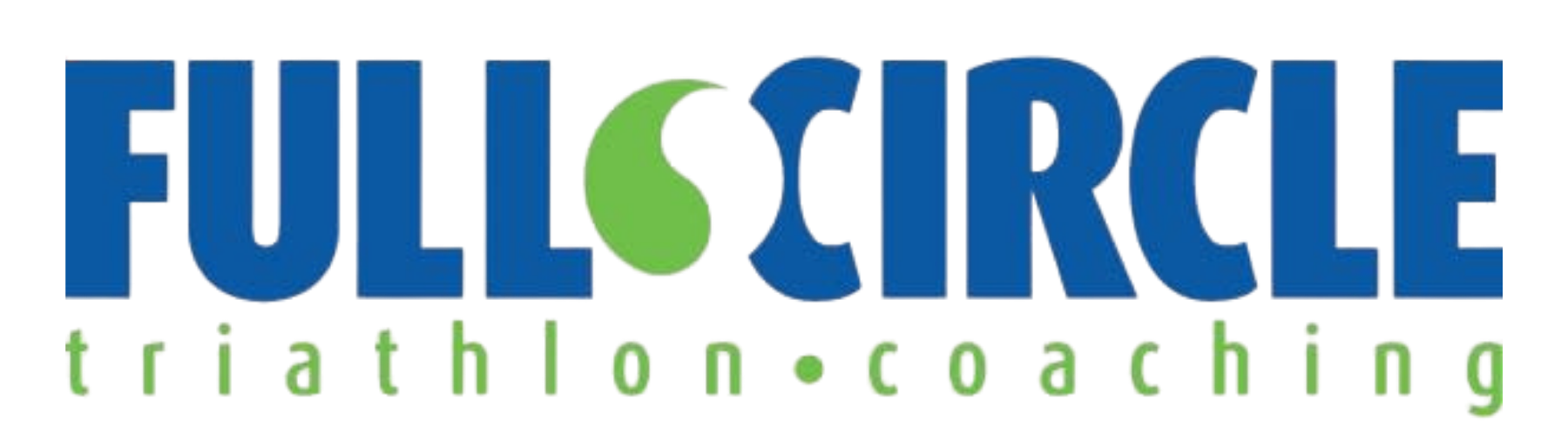
    I wanted to share with you my “Top 11 Eat this, NOT that” choices you can make to start eating healthier.

    Some of my suggestions you may understand and others may surprise you.


    Eat Grass-fed butter NOT processed vegetable oil spreads
    Eat Coconut aminos NOT Soy sauce
    Eat Full fat organic yogurt NOT No/low fat fake flavored yogurt
    Eat 1 ingredient coconut or almond milk NOT commercially farmed cow’s milk
    Eat root vegetables NOT processed whole grain pastas and breads
    Eat white rice NOT brown rice
    Eat more fat Not processed carbs
    Eat Free range organic animal protein not farm raised commercially raised animal protein
    Drink spring water from glass bottles NOT filtered water from plastic bottles
    Eat wild caught fish and shrimp NOT farm raised fish and shrimp 
    Eat Chia seeds/ hemp heart pudding not processed oatmeal 


    Want more support with your nutrition?


    If you are interested in leveling up your nutrition, book a call with Coach Erinne to learn more about our upcoming Nutrition Essentials Program. Book your free call here.

    Our next Nutrition Essentials Program kicks off in June! This 6-week coaching experience is designed to help you:

    🍳 Eat for YOUR metabolic type
    🏃‍♀️ Fuel your workouts and daily life more efficiently
    🧠 Clear brain fog, boost energy, and feel more in control
    🧪 Heal your gut, balance blood sugar, and reduce inflammation

    It’s not about perfection—it’s about understanding what works for YOUR body.

    Click here to learn more. 

    Erinne Guthrie is a USA Triathlon Level II Certified Coach since 1999 and Chief Motivating Officer at Full Circle Coaching, LLC since 2010. Creator of the Triathlon Transformation. She has been training, racing and coaching triathletes since 1997.  She is also a CHEK Holistic Lifestyle Coach Level 3, USMS Master’s Swim Coach, Motivational Speaker, Metabolic Efficiency Specialist, Mom, Mermaid and much much more.

  • Sticking with it…….. even when you don’t want to!

    This is what will get you the results you desire. 

    No, this is not the “sexy” side of the sport, 

    This is not that IM finish line photo with your PR time, but it is what will get you there. 

    Time after time, you hear from every coach in the world.

    Consistency is key.

    You see the Olympic athletes on TV right now, getting their world records, and punching their tickets to Paris and it is all so exciting.

    But guess what? 

    These big moments come from hundreds and hundreds of boring routines, day after day, week after week, and month after month training sessions. 

    Paying attention to the numbers. 

    The heart rate, rpms, power, rpe, pace, etc.

    Of course, we are all working toward the big day, and that is the reward.

    There is no better feeling than crossing the finish line of a triathlon.

    When is your next finish line? Will you be ready? Did you show up on the day-to-day? The results will tell!

    Can’t wait for the next one.

    Here’s to the day to day!

  • Beat the Heat! How to train and race when it’s HOT outside!

    It is HOT! The hottest it’s ever been in the history of the world, according to the news!

    Please be careful when training in the heat.

    Training in the heat can cause excess dehydration, high heart rates, heat stroke, and death! But you can do lots of things to help your body handle the heat and still be able to train and race.

    • Practice training in the heat gradually. Start with 15-30 minutes and increase based on your race distance. This can help your body acclimate to higher temperatures. It’s a good idea to plan some of your training at the exact time of day you will be racing so your body gets used to the heat both mentally and physically.
    • Sauna- sitting in a sauna post-workout for 15 minutes, building up to 20-30 minutes, can help you get used to the heat as well. If possible, do not drink water while in the sauna, but please hydrate with electrolytes post-sauna.
    • Hydrate and fuel a little extra than you think you should. Your body uses more calories and energy to keep core body temperatures down. I suggest sips of cool hydration every 10 minutes minimum in general while training, but especially if the heat is on.
    • Add extra sea salt to your food and in your water bottles. Remember to add a good-quality electrolyte mix. My favorite is the watermelon electrolyte supplement from Body Health. Organic coconut water is also helpful for added electrolytes.
    • Cooler drinks can help while training in the heat, but be careful with cramping in the stomach if the drink is too cold; one tip is to hold the ice water in your mouth for a few seconds before swallowing and take smaller sips.
    • Cool towels and sponges are sometimes offered on the race course. Using this in training works great too! Apply them to your forearms, forehead, back of your neck, and crotch area- be careful not to get your socks wet in your shoes which can cause blisters. Cool forearm sleeves can also be helpful.
    • Pre-Cooling- being in air conditioning or under a fan before training or racing can help you handle the heat longer.
    • Keep your face shaded with a visor instead of a closed-off baseball cap, and stay away from black helmets and race and training kits; black increases heat!
    • Never skip an aid station on the race course; reduce your pace to keep moving forward as needed.

    I used every single one of these tips while riding across the desert during RAAM in 2022. They make a big difference when racing warmer races for my athletes and me.

    Happy heat training and racing!

    Join my private Facebook group, Triathlon Obsessed, for tons of tips and triathlon support!

    If you’re curious about what’s possible with your training, schedule your FREE Triathlon Breakthrough Session and let’s do it! Click here: http://www.scheduleyou.in/5ZIsVaU 

    Erinne Guthrie is a USA Triathlon Level II Certified Coach since 1999 and Chief Motivating Officer at Full Circle Coaching, LLC since 2010. Creator of the 16 week Triathlon Transformation. She has been training, racing and coaching triathletes since 1997.  She is also a CHEK Holistic Lifestyle Coach Level 3, USMS Master’s Swim Coach, Motivational Speaker, Metabolic Efficiency Specialist, Mom, Mermaid and much much more.

  • How you do anything is how you do everything

    How you do anything is how you do everything.

    I love that saying, and it could not be more true for triathlon training.

    Most triathletes think doing well in the sport requires lots of swimming, biking, and running.

    And, of course, you have to swim, bike, and run, but the technique you use is paramount.

    Most of us were not raised swimming, biking, or running as kids, and our adult sitting posture can negatively affect how we move in these sports.

    If you learn how to swim, bike, and run better than you do now, you will automatically go faster with less effort and have less chance of injury.

    This is by far the best place to put your efforts.

    Every training session should include some technique work so you can perform at a higher level with less effort.

    If you don’t know how to swim, bike, or run properly, it’s time to hire a competent coach, get a video analysis, and pick three things to work on in each sport for the next month. Then, repeat every month to keep improving!

    Evaluate your technique now- do the drill work and evaluate again.

    You will be faster if you do the simple work.

    The critical thing to discover is if the coach you hire knows how to help you. Many coaches CLAIM to be able to evaluate you and help you understand what to do to improve, but do they?

    I can help every swimmer, biker, and runner improve. I have a video analysis assessment and testing system that works, and I guarantee my, I mean, YOUR results.

    But you must still do the work, show up, and practice!

    There is no getting away from showing up and doing the training.

    But training smarter, not harder, and longer is the key to success.


    Ready to bring more intention to your training—and your life?
    Our Triathlon Transformation program is where committed athletes go from stuck and inconsistent to strong, confident, and race-day ready.

    This 16-week high-touch coaching experience is designed to help you:

    • Improve all three disciplines with video analysis and personalized feedback
    • Train smarter with metabolic testing and holistic performance tools
    • Gain energy, shed overwhelm, and finally see results that stick

    👉 Click here to learn more and apply through our “Get to Know You” form. This short form helps us understand your goals, where you’re starting from, and
    whether this program is the right fit for your triathlon journey.

    Spots are limited. We only accept a small number of athletes to ensure personalized support.


  • Take Your Training to the Next Level: The Power of Testing for Peak Performance

    We are testing this week!

    It’s that time of the season when we need to retest or test for the first time if you did not aat the beginning of the year.
    If you are not assessing, you are guessing, and testing eliminates the guesswork of knowing how hard to train in your intervals and races.

    All of this makes you faster- which is what we all want, RIGHT?

    This is how it should work.

    1. Train for a minimum fitness level to avoid injury while taking your tests. This is typically a 4-6 week base/ build training program that focuses on technique, lots of drill work, and zone 1, 2, and 3 training- which means keeping intensity lower to help you build an aerobic base. If you already have a base, you  can test you right away.

    2. After a recovery week, perform your swim, bike, and run tests. There are many options for different types of tests, but it is key to keep as many of the parameters the same every time.

    For example, if you perform a 1-mile run test as your type of test for the run. AIm to have the same breakfast, perform the test at the same location on the same day and in the same conditions as the previous test.

    It’s impossible to have everything the same, but as much as possible. Be sure to wear your heart rate monitor and Garmin watch for the run and swim tests, and use a calibrated bike computer for bike test to record the total time for the tests and collect all your data -the power, pace, and rpms all yield important information.

    3. Create your training zones based on your tests. Most athletes don’t know how to do this, but I can help. This is the most important step because, without training zones, you are training blind.
    If you only have three speeds—easy, medium, and fast—you are leaving a lot of guesswork in your training.

    With precise training zones based on your test performance, you create specificity in your training, yielding repeatable performances for the distance of the race you are training for. It’s quite simple, but most athletes just wing it! I think it is a huge waste of time and energy when you can get the information so simply and then train accordingly.

    This is how I help the FC athletes get faster race after race.

    Are you ready to get serious about your training, stop wasting time, and start training like a pro?

    Efficient, personalized training can transform your approach and help you achieve what once seemed impossible.

    Curious to learn more about how we can help you reach your tri goals?

    Take the first step by filling out our get-to-know-you form here.

    Then once you complete the form, providing as much detail as you can so we can focus on the highest leverage tweaks to optimize your training and performance…

    At the bottom of that form is a link to schedule a one-on-one session with me.

    5 spots are available each month. Space is limited.

    Simply select a time that works best for you! Talk soon. : )

  • Full Circle Coaching Training Tips: Are you in the Zone?


    Are you using Training Zones to guide your training and racing?

    Let’s get real—are you actually training smart, or are you just training hard?

    Many triathletes fall into the trap of thinking that pushing themselves harder, faster, and longer is the key to improving performance. But if you’re constantly training in the wrong zone, you could
    be working against your own progress.

    At Full Circle Coaching, we focus on smarter, more efficient training. That means knowing which training zones to be in and when.

    👉 Here’s why your training zone matters:
    Your body uses different energy systems depending on the intensity of your workout. If you’re always pushing at high intensity, you’re likely burning sugar instead of fat, which leads to quick exhaustion, slower recovery, and eventually…burnout.

    Training in the right zones helps you:
    ✅ Build a solid aerobic base (your “engine”)
    ✅ Improve fat-burning efficiency
    ✅ Increase speed without extra effort
    ✅ Recover faster and stay injury-free
    ✅ Peak perfectly for race day

    But here’s the catch:
    Without proper testing — like metabolic efficiency testing or heart rate testing — it’s nearly impossible to know your true training zones.
    You’re just guessing…and guessing leaves results on the table.

    Want to train smarter, not harder?
    At Full Circle Coaching, we help our athletes identify their exact zones based on real data, not assumptions. It’s one of the biggest game-changers for improving performance while keeping training sustainable and fun.

    How we do it at FULL CIRCLE COACHING:

    Swim: Pace tests for different distances (long course & short course), then train the paces specific to race distance with form work and speed work at specific times in the training cycle.

    Bike: Lactate threshold field tests and or blood lactate tests, then train the most inefficient zones and zones specific to race distance.

    Run: 1 mile, 5k and 10k races for field tests and or VO2 max or Blood Lactate testing, then train the zones specific to race distance.

    After getting the results of the tests, we create the zones for training and then the periodized training plan to train certain zones for training blocks or set periods of weeks.  This is where it becomes an art and the better the communication between coach and athlete the better the coach can adjust the workouts and achieve the desired outcome.  This is what the upload function on Training Peaks and the Post Comments box in your workouts is for.  After you perform the work, you upload the results so your coach can analyze and see if you were successful. Then build upon success and keep moving forward.

    Next Step:

    We retest every 6 to 8 weeks, we tweak and adjust depending on the distance of the “A” race.  One of our motto’s is “Strong Before Long” and “Skill before Speed” even for my Ironman athletes! We prescribe minimalist training and specificity which will get you where you want to be much faster with less overuse injury and more power and strength!

    Let us guide you with a minimalist, specific training plan that gets you stronger, faster, and ready to race at your best.

    👉 Fill out our “Get to Know You” form so we can learn more about your goals, current training, and how we can support your triathlon journey: Click here

  • It’s All In The Details

    We are in the thick of tri season, and races are happening every weekend.

    Are you keeping up with your training?

    Have you had setbacks with illness? Are you feeling tired? Has life happened?

    This is all a normal part of the journey, it is happening to everyone, but can all be prevented by paying attention to the details in your training plan.

    The details:

    Nutrition: If you are not fueling to support your training, you will burn out or get sick. Your body will ensure that happens because it cannot trust you to get the nutritional support and rest that it needs to keep going.

    You can avoid this if you fuel properly before, during, and after training.

    It’s simpler than it seems. Eat to fuel your training with unprocessed, one-ingredient carbohydrates, fats and proteins – examples would be sweet potato, avocado and any animal protein you enjoy.  Time your nutrition before and after with real food and use clean sports nutrition while training.

    Now is not the time to try to eat carnivore or fast. Your body needs fuel to perform!

    I believe we need good whole-food organic supplements to help with the added stress that triathlon puts on our bodies and lifestyles. By this I mean not synthetic vitamins but vitamins made from organic foods that your body recognizes and can use to support any deficiency’s that you are not getting from your food.

    Sleep: it is the best recovery tool. DO NOT neglect your sleep.

    If you do, you will pay. It’s not a question of IF, but WHEN your body forces you to recover because you have not gotten enough sleep. 7-9 hours/night is ideal. If you get a 6 or less, make up for it with a nap or longer sleep the next night. Please do not give me the excuse of not having enough time- stop scrolling on social and go to bed earlier!

    Strength Training: it is sometimes more important than swimming, biking, or running.

    If your body lacks the structural/muscular strength it needs, the repetitive movements of swimming, biking, and running can cause overuse injuries.

    On those days when you simply cannot get out the door for your swim, bike, or run, make sure you get 20 minutes of strength training.

    Buy your equipment and have a set of dumbbells right next to your desk.

    Have a mat set up and a pull-up bar in the doorway.

    Do some squats, lunges, rows, and push-ups every day.

    You will be amazed at how much your tri performance will improve by not neglecting your strength training!

    All of these details are an intergral part of my Triathlon Transformation Training Program. This is how I’ve helped 1000’s of athletes over the past 27 years acheive their triathlon dreams.

    Will you be next?

    Are you ready to take your triathlon training to the next level? Don’t let setbacks hold you back any longer. It’s time to prioritize your nutrition, sleep, and strength training to unlock your full potential.
    Let’s get to know each other better – fill out this form and let’s work together to achieve your goals.

    Your journey to success starts now!